
How F&B businesses can build stronger customer relationships beyond the transaction with WhatsApp, Loyalty, CRM, and AI.
The F&B Growth Playbook Is Getting Harder
For years, growing an F&B business has meant doing more of what already works. Find a better location, serve better food, build a stronger presence on Instagram, join delivery platforms use whatsApp to communicate with customers and run promotions.
These are familiar growth levers for F&B businesses. But each comes with its own limits. At the same time, salary and labor costs, rent, delivery and platform costs continue to put pressure on margins. The challenge is that being busy does not always mean building a stronger business.
An outlet can be crowded while repeat rates decline. A loyalty program can have thousands of members while remaining inactive. WhatsApp conversations can keep growing without customer data following them.
So the question starts to shift:
What happens after the transaction?
The Opportunity Beyond the Transaction
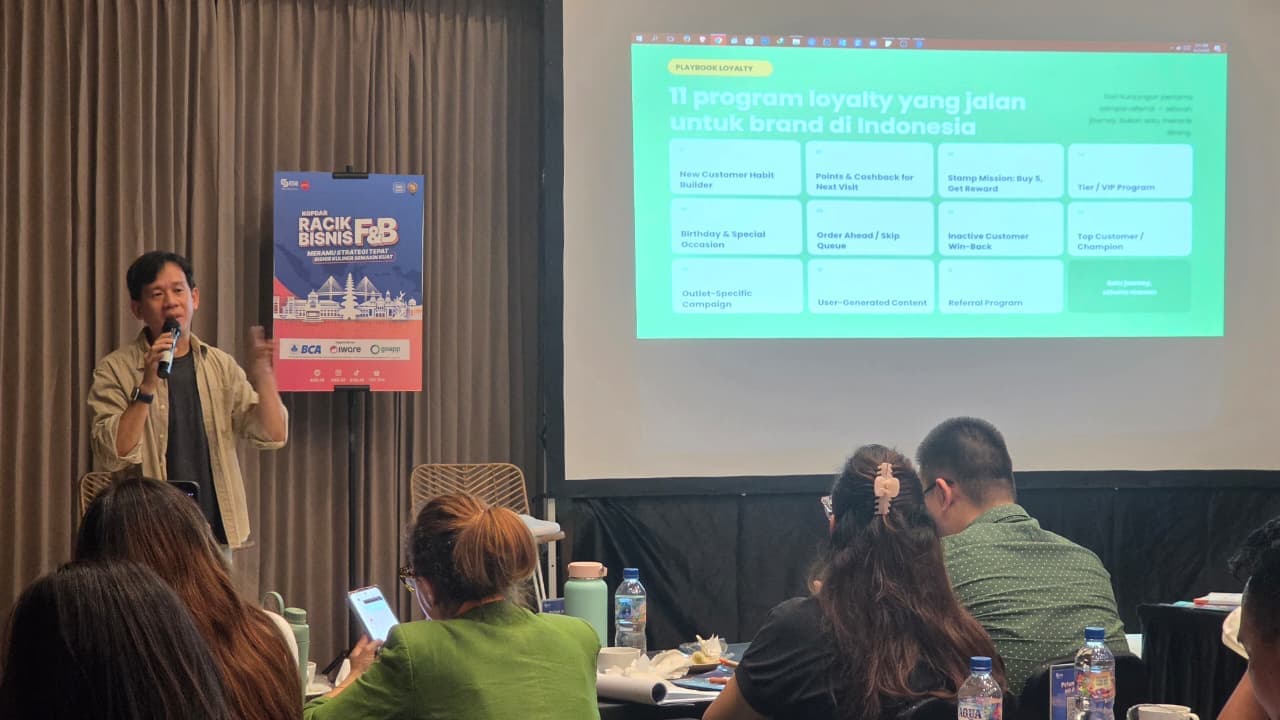
This was one of the perspectives discussed by Goapp at Racik Bisnis F&B Bali on June 25, 2026, where Goapp joined ESB as the Official Loyalty Program Partner. The opportunity for F&B businesses is not only about bringing more customers in. It is about building a stronger relationship with the customers who have already come. A first transaction creates an opportunity to understand who the customer is, what they like, how often they visit, what they respond to, and what might bring them back.
That changes the customer journey from:
Discover → Purchase → End
into:
Discover → Purchase → Understand → Engage → Return
The transaction is no longer the finish line. It becomes the starting point for the next relationship.
WhatsApp Can Be More Than a Chat Channel
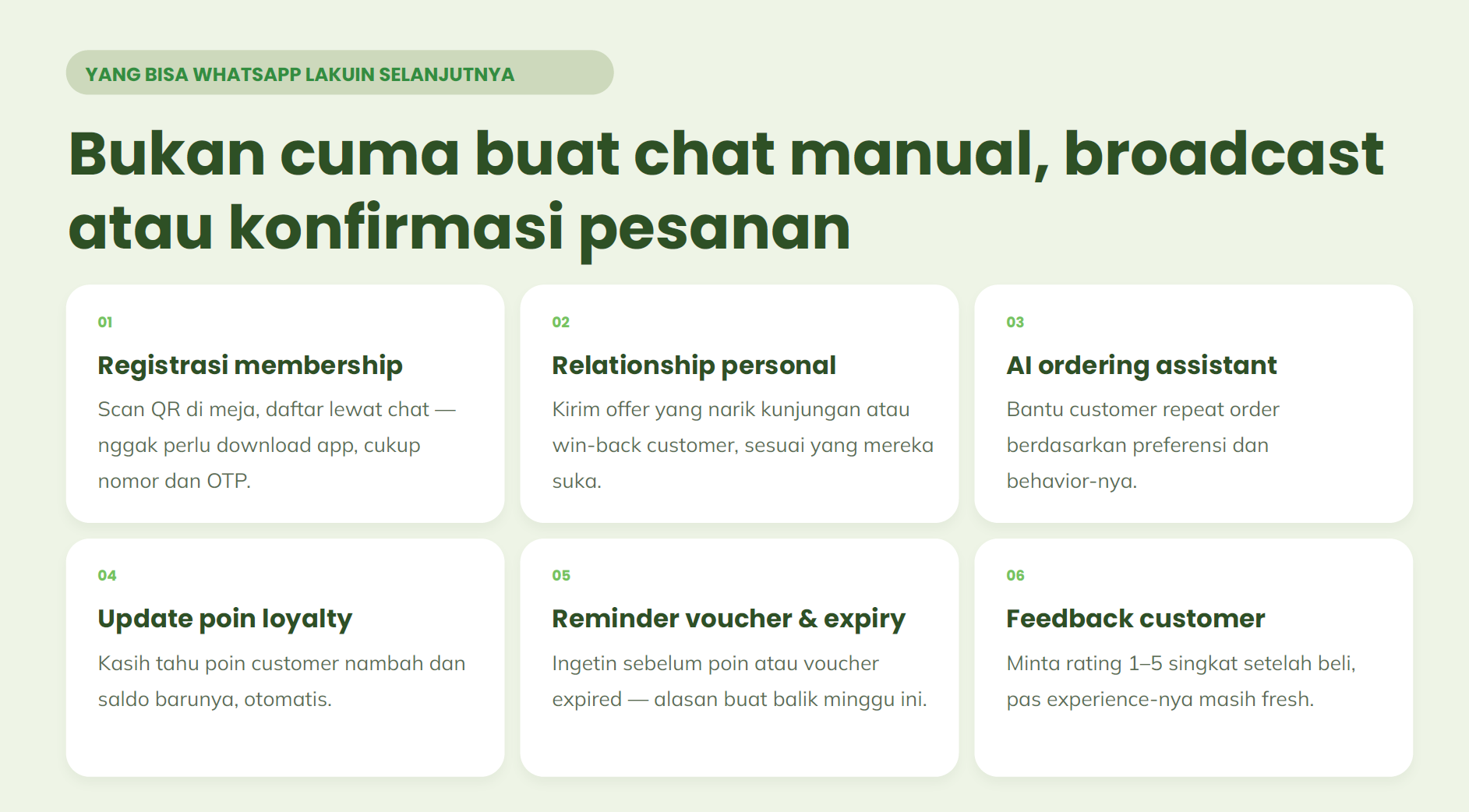
For many customers in Indonesia, messaging is already a natural way to interact with businesses. That makes WhatsApp an important part of the relationship layer not simply a place for manual chats or order confirmations. In the presentation, WhatsApp is positioned as a channel where customers can ask questions, order, complain, confirm, and build trust.
But its role can go further. A customer can register for membership through WhatsApp, receive a personalized offer, check loyalty points, get a voucher reminder, provide feedback, or even receive help with a repeat order.
The important difference is context. Instead of sending another generic broadcast, a business can communicate based on an actual customer behavior such as a favorite menu, first visit, loyalty balance, or inactivity. That makes communication part of the relationship rather than simply another campaign.
Loyalty Is Not Just About Points
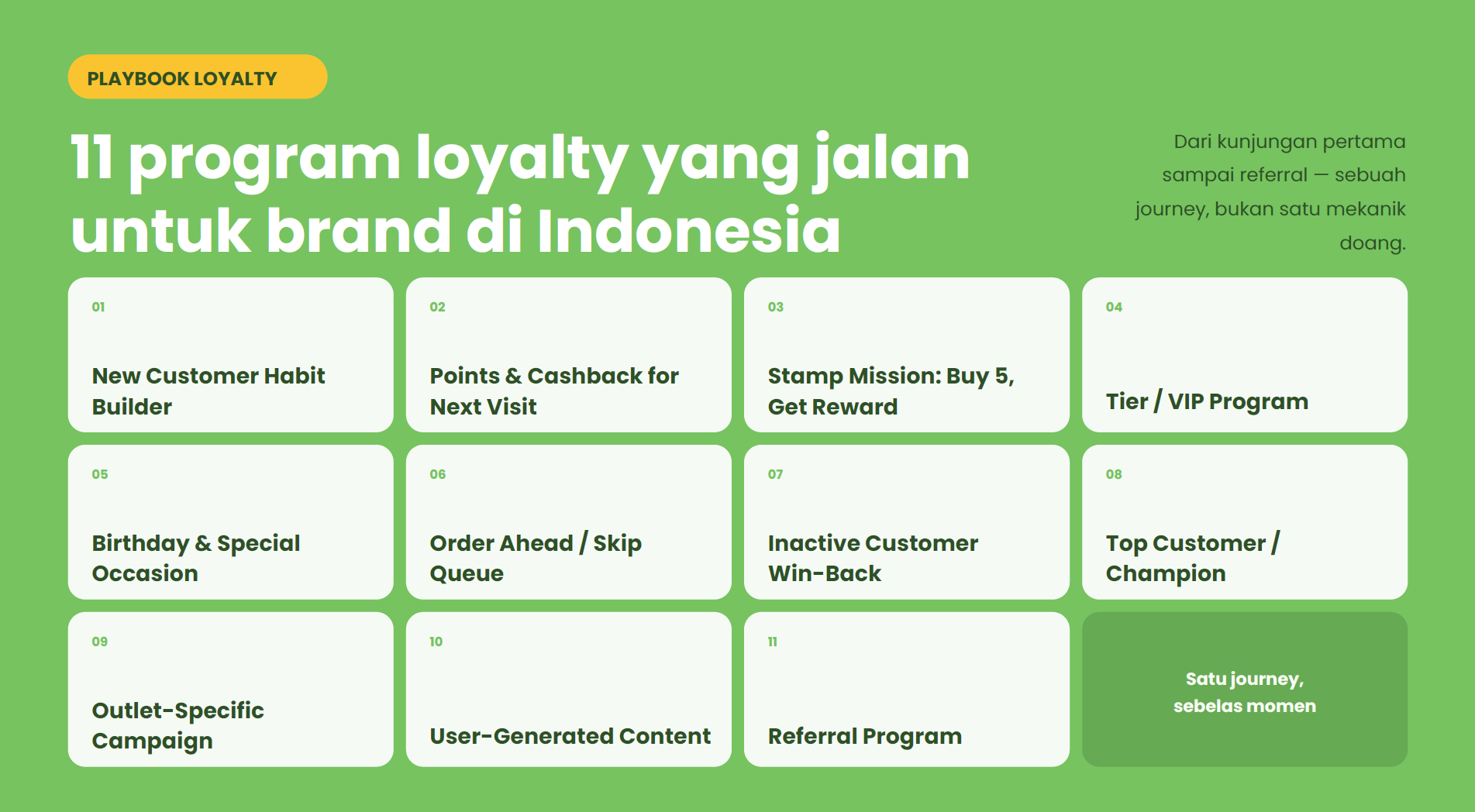
A loyalty program can look successful on paper while doing very little for the business. Customers collect points but never get reminded to use them. Customers receive vouchers but forget them before they expire. Customers become members but never receive a journey that encourages a second or third visit.
That is why loyalty needs to be treated as a journey, not a single mechanic. The presentation outlines different moments where loyalty can create a reason to return from new-customer habit building and points, to VIP programs, win-back campaigns, referrals, and outlet-specific campaigns.
The underlying idea is simple:
Loyalty is not about having points. It is about knowing who should come back, why they should come back, and what action can make that happen.
AI Should Help Businesses Take the Next Action
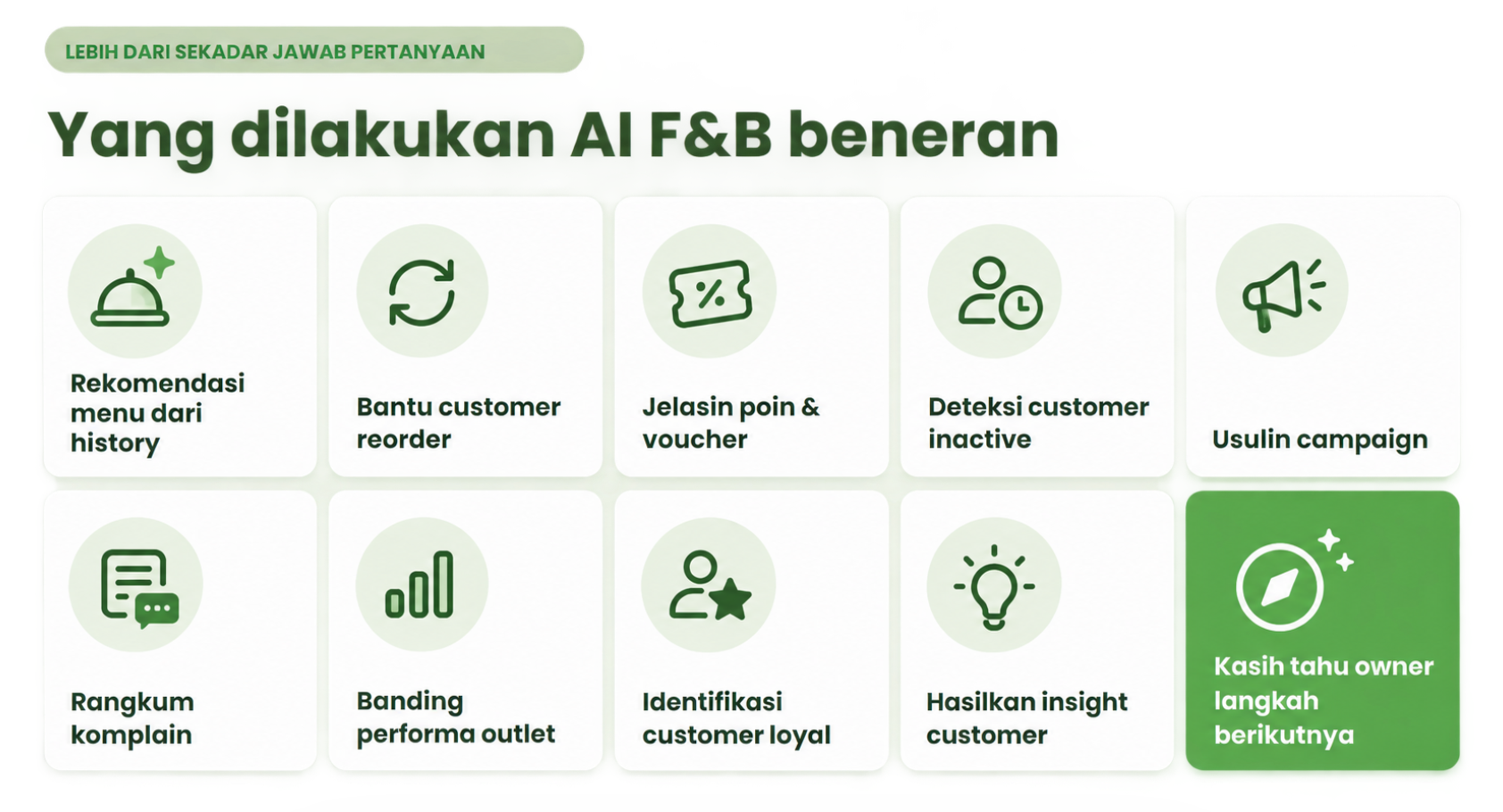
This is where AI becomes more interesting. A basic chatbot can answer:
“Ini daftar menu kami.”
But a customer relationship system can do much more. It can recommend a menu based on purchase history, help with a reorder, explain loyalty points, identify inactive customers, summarize feedback, recognize loyal customers, and surface the next action for the business.
The distinction is important.
AI is not valuable simply because it can answer more questions.
Its real value comes when it can use customer context to help the business decide what should happen next. And that requires data.
Transaction data.
Loyalty data.
Customer profiles.
WhatsApp conversations.
Voucher behavior.
Outlet behavior.
Campaign results.
Customer feedback.
Without that connected context, AI risks becoming just another chatbot.
One Customer, Not Separate Data Points
This is ultimately where WhatsApp, Loyalty, and AI come together. The customer who orders today should not become a completely new customer tomorrow. Their transaction, loyalty activity, conversations, preferences, and behavior should contribute to one continuous understanding of that customer.
This is also the thinking behind Goapp One for ESB. ESB focuses on the transaction layer order and outlet operations, payment and point of sale, menu, and in-store flow. Goapp continues into the relationship layer membership and loyalty journeys, WhatsApp, customer insights, and the next action.
In other words:
ESB captures the transaction.
Goapp builds the relationship.
From Transactions to Relationships
The future opportunity for F&B businesses may not simply be about getting more transactions. It is about getting more value from the relationships behind those transactions. A customer who has just made their first purchase needs a different experience from a loyal customer.
An inactive customer needs a different reason to return. A high-value customer may deserve recognition rather than another generic discount. And a customer ready to reorder may not need another sales pitch they may simply need the right next step. That is why customer data, WhatsApp, Loyalty, and AI matter when they work together.
Not to make businesses communicate more.
But to make every relationship more meaningful.
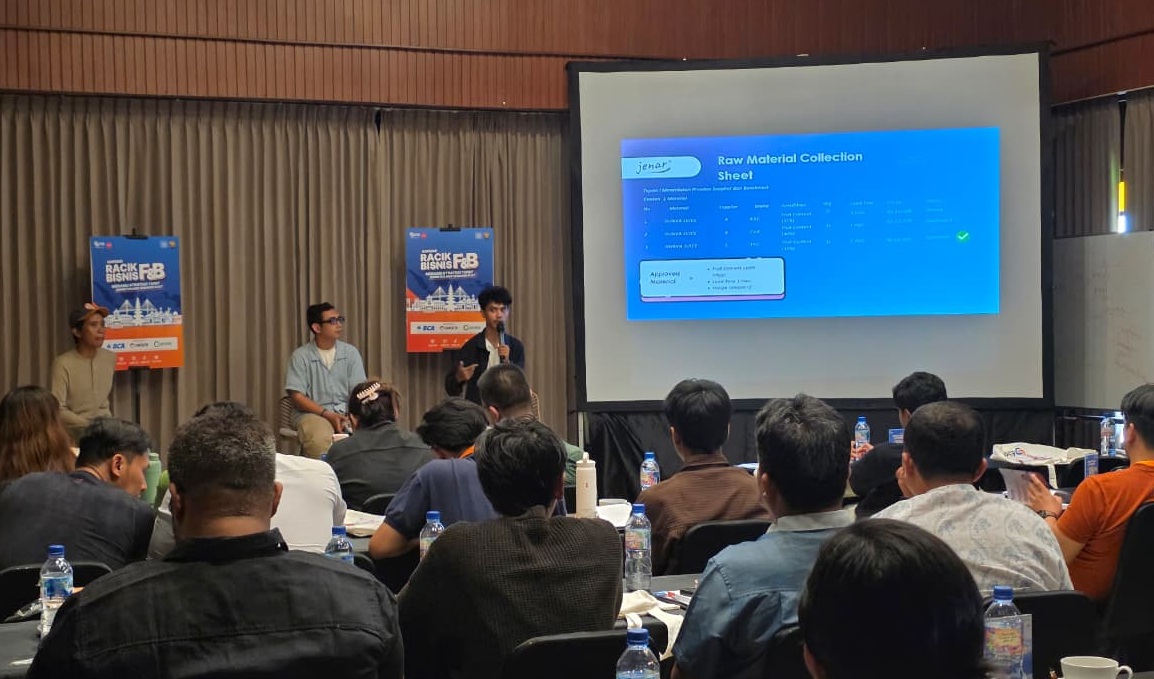
The Takeaway from Racik Bisnis F&B Bali
The F&B industry will continue to compete on food, location, service, social media, promotions, and operational efficiency. But there is another layer worth building:
the relationship after the transaction.
Because getting a customer to buy once creates a transaction. Understanding that customer, giving them a reason to return, and knowing what to do next creates something more valuable:
A relationship that can continue beyond the checkout. And that is the shift from transactions to customer relationships.
Want us to tear down your customer journey?
30 minutes. We look at how you're acquiring customers and where you're losing them, from ads and WhatsApp leads to CRM follow-up, repeat purchases, and loyalty. You'll leave knowing what to fix first.